


Linux & Ubuntu Essential Commands Every Server Administrator Should Know
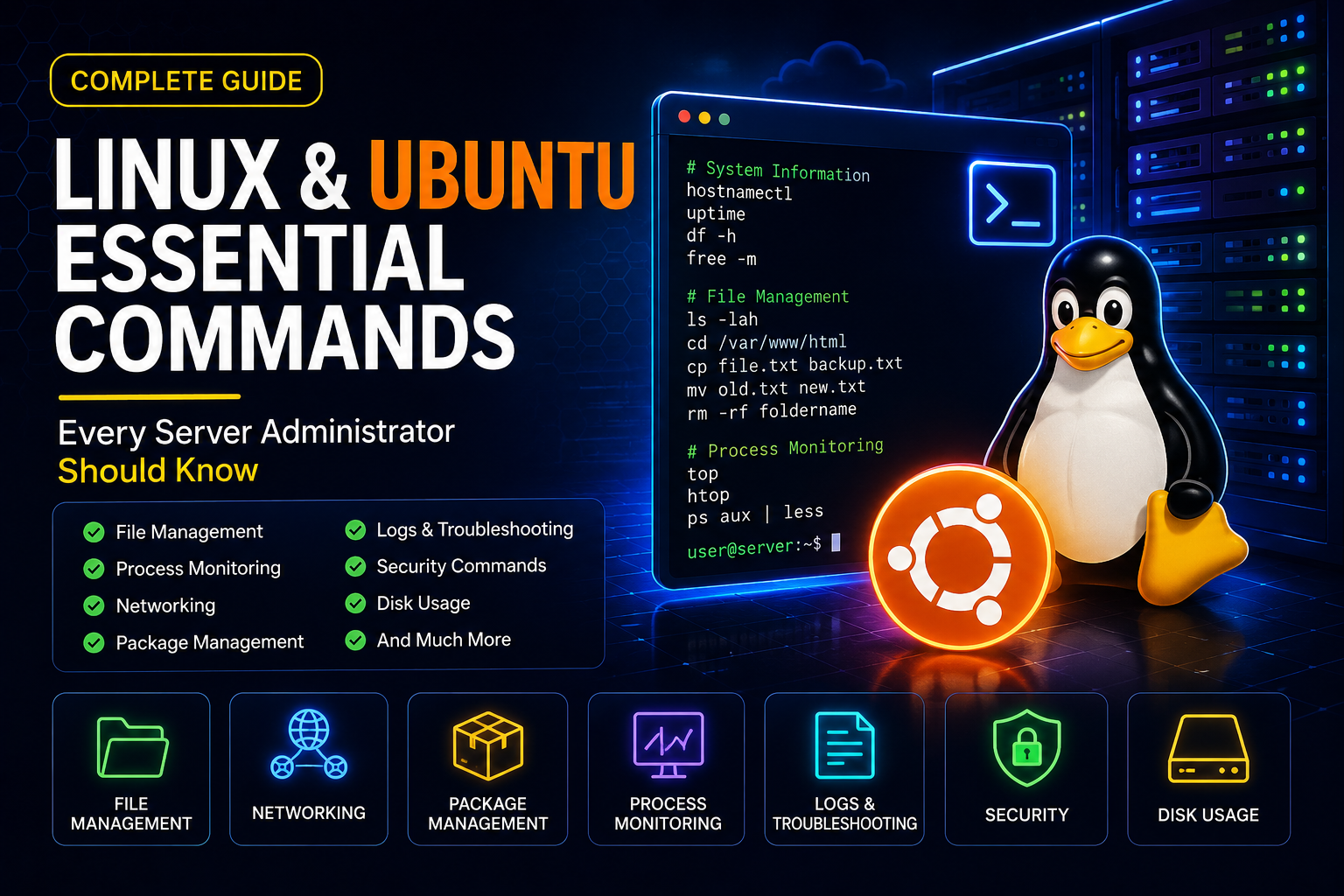
Learn the most useful Linux and Ubuntu commands for managing servers, monitoring resources, troubleshooting issues, securing systems, and running production workloads.
In This Guide
System Information
hostnamectluname -auptimewhoamilscpufree -mFile Management
ls -lahpwdmkdir myfoldercp file.txt backup.txtmv old.txt new.txtrm -rf foldernamefind / -name "*.log"Package Management
sudo apt updatesudo apt upgrade -ysudo apt install nginxsudo apt remove nginxapt list --installedProcess Monitoring
tophtopps auxkill -9 PIDsystemctl status nginxNetworking Commands
ip aping google.comcurl ifconfig.mess -tulpnnetstat -tulpntraceroute google.comDisk Usage
df -hdu -sh *lsblkfdisk -lLogs & Troubleshooting
journalctl -xetail -f /var/log/syslogdmesgtail -100 /var/log/nginx/error.logSecurity Commands
sudo ufw statussudo ufw allow 22sudo fail2ban-client statuslastsudo passwd usernameSSH Commands
ssh user@server-ipssh-copy-id user@server-ipscp file.txt user@server:/home/userFrequently Asked Questions
What is Linux?
Linux is an open-source operating system widely used for servers, cloud infrastructure, web hosting, DevOps automation and enterprise applications around the world.
Why is Linux popular for servers?
Linux provides excellent stability, security, flexibility, performance and scalability, making it a preferred choice for hosting providers and enterprise environments.
What are the most important Linux commands?
Commands such as ls, cd, pwd, top, htop, ps, df, du, systemctl, journalctl and ssh are commonly used by Linux administrators every day.
How do I check Linux server uptime?
uptimeThe uptime command displays how long a server has been running and current system load information.
How do I check memory usage in Linux?
free -mThis command displays memory utilization including RAM and swap usage.
How do I check disk usage in Linux?
df -hThe df command shows available and used disk space across mounted filesystems.
How do I find large files in Linux?
find / -type f -size +100MThis command helps identify large files consuming excessive storage space.
What is SSH in Linux?
SSH (Secure Shell) provides encrypted remote access to Linux servers and is the standard method for server administration.
How do I secure SSH access?
Use SSH keys, disable root login, enable Fail2Ban, limit login attempts and keep SSH updated regularly.
How do I restart a Linux service?
sudo systemctl restart nginxsystemctl is the preferred method for managing services on modern Linux distributions.
What is systemctl?
systemctl is used to start, stop, restart, enable and monitor services managed by systemd.
How do I monitor Linux processes?
Use top, htop, ps aux and system monitoring tools to identify resource usage and troubleshoot issues.
What is the difference between Ubuntu and Linux?
Linux is the operating system kernel, while Ubuntu is a Linux distribution built on top of the Linux kernel.
Why do hosting providers use Ubuntu?
Ubuntu provides long-term support, extensive package repositories, strong security updates and broad compatibility with hosting software.
What Linux skills should every DevOps engineer know?
Process monitoring, networking, SSH management, service administration, package management, shell scripting and troubleshooting are essential Linux skills for DevOps professionals.
CloudRevol Linux Administration Tips
- ✓ Enable automatic security updates
- ✓ Configure UFW firewall
- ✓ Monitor server logs daily
- ✓ Use SSH keys instead of passwords
- ✓ Keep Ubuntu updated regularly
- ✓ Monitor disk usage frequently
- ✓ Backup critical data regularly